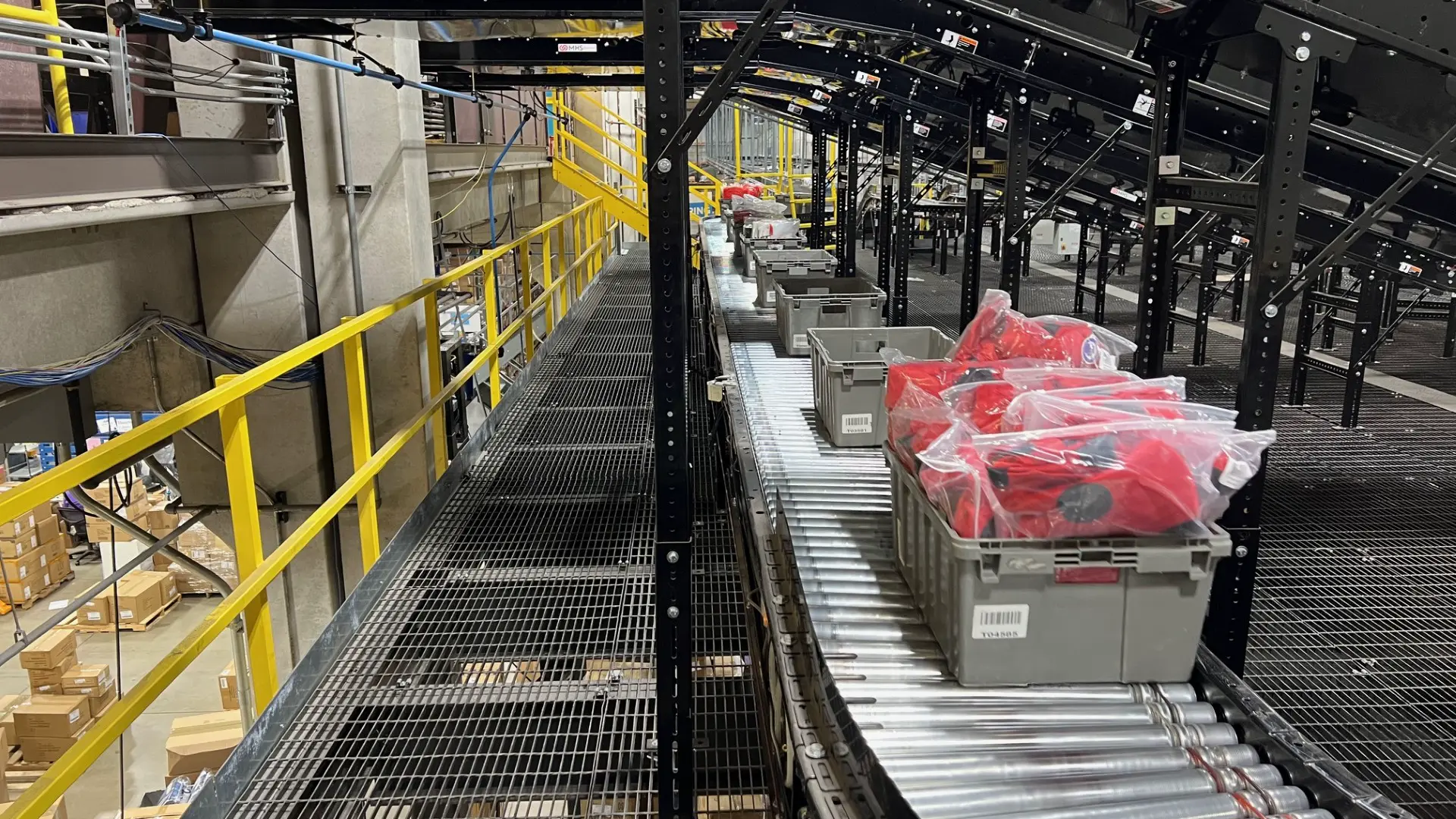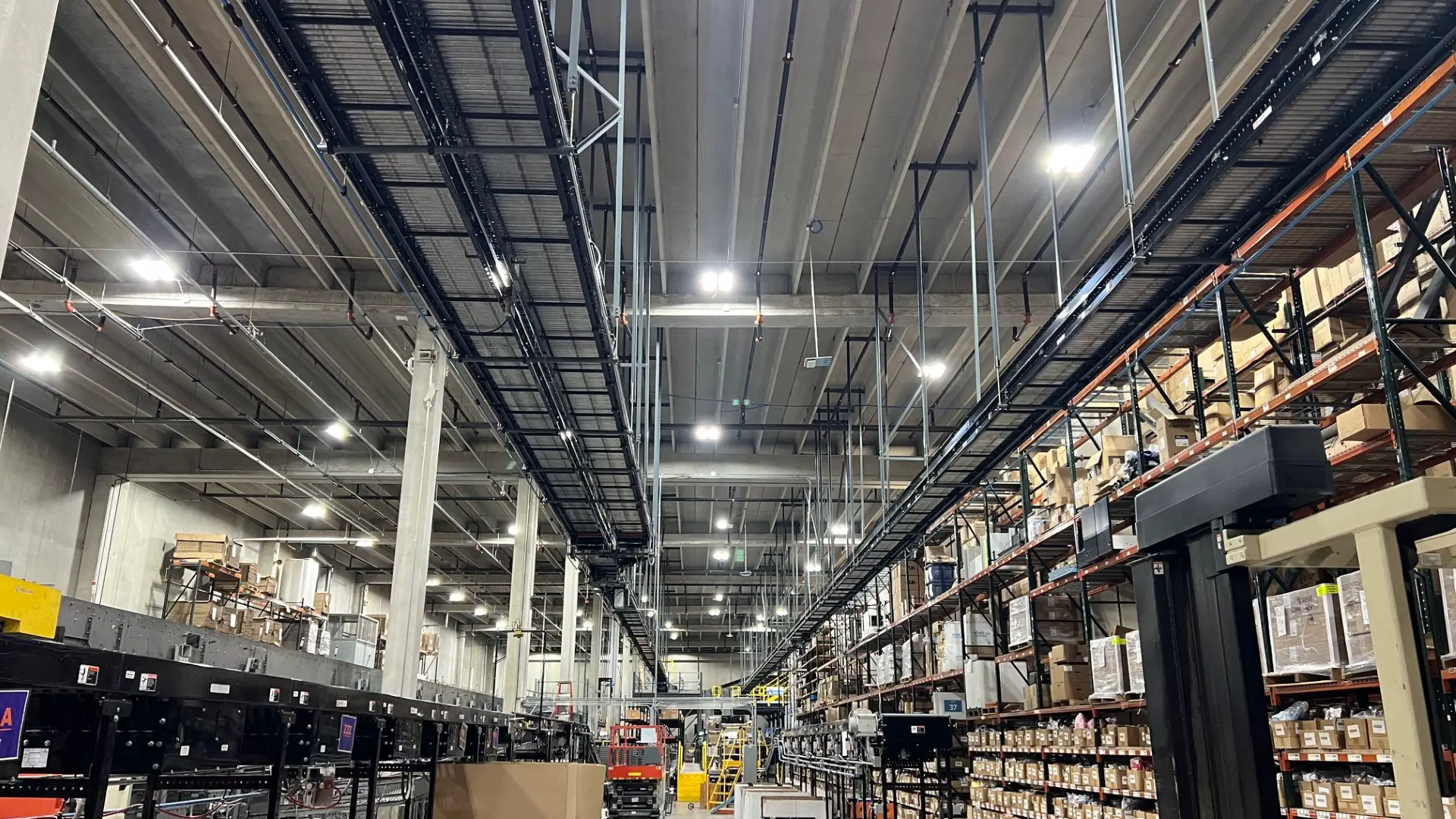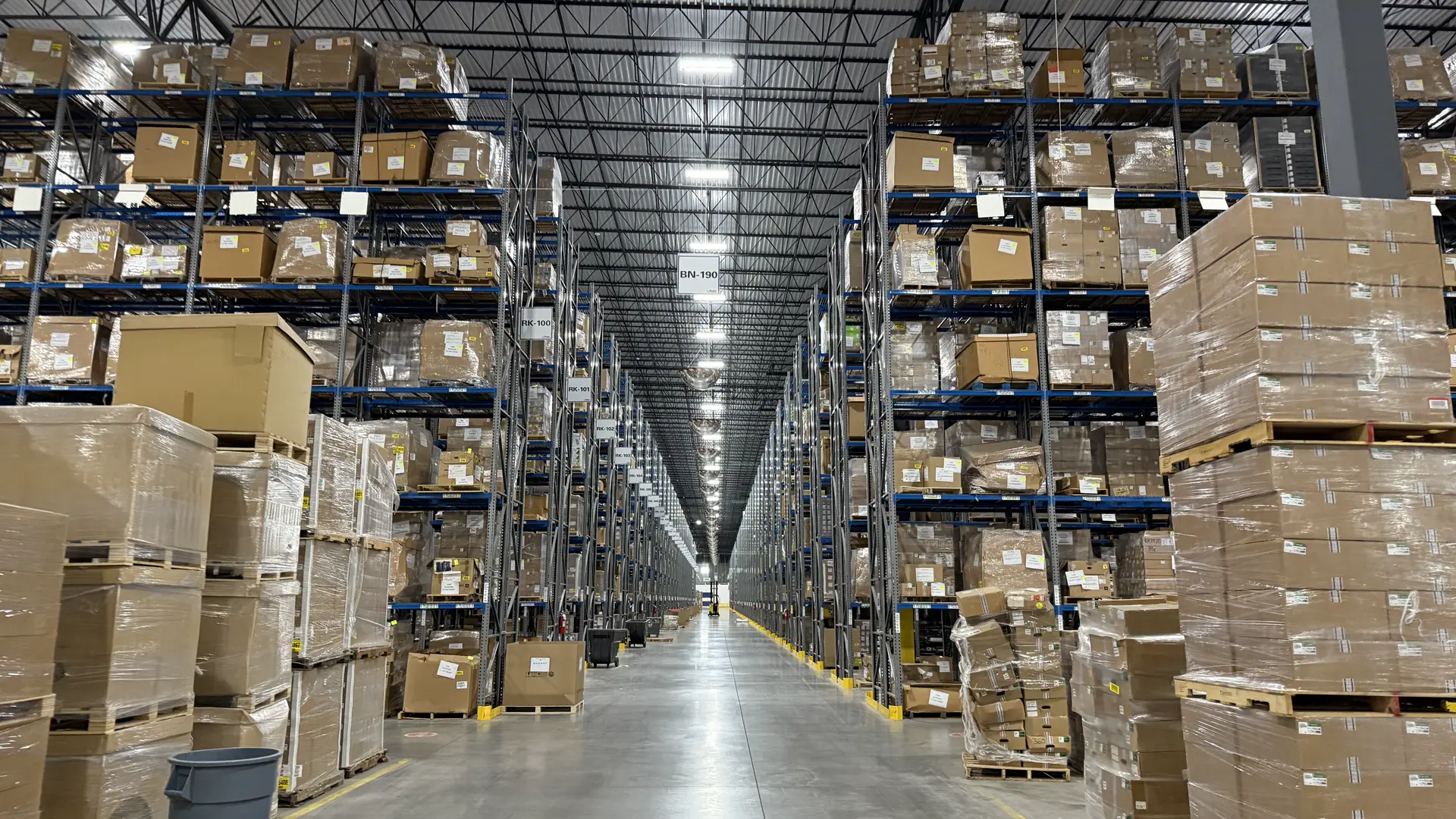
An e-commerce apparel fulfillment operation in Mankato, Minnesota had outgrown its 189,000-square-foot facility, and expanding the building wasn't an option. Instead of adding space, the project redesigned how the existing space worked. The picking conveyor was consolidated to reclaim floor space for storage, high-velocity SKUs were moved into carton flow to cut replenishment demand, and picking was separated from forklift traffic. On the outbound side, a new routing strategy sent orders to carton-packing or automated-bagging lines based on how they needed to be packed, shifting about 65% of volume off a sorter that had hit its limit. Completed in phases over about three months while the warehouse kept shipping ahead of peak season, the redesign added storage and processing capacity, improved outbound order processing by roughly 25%, and reduced required labor.
When Expansion Isn't an Option: Redesigning for Capacity
Challenge
An e-commerce apparel operation in Mankato, Minnesota had hit the limits of its 189,000-square-foot facility. Order volume was growing, storage was full, and nearly all outbound volume ran through a single sorter that was already at capacity. Expanding the building wasn't an option. Any fix had to work within the existing footprint and could not interrupt daily fulfillment, with peak season approaching. The problem was bigger than storage. Picking, replenishment, packing, sorting, and forklift traffic were all competing for the same space and limiting each other.
Solution
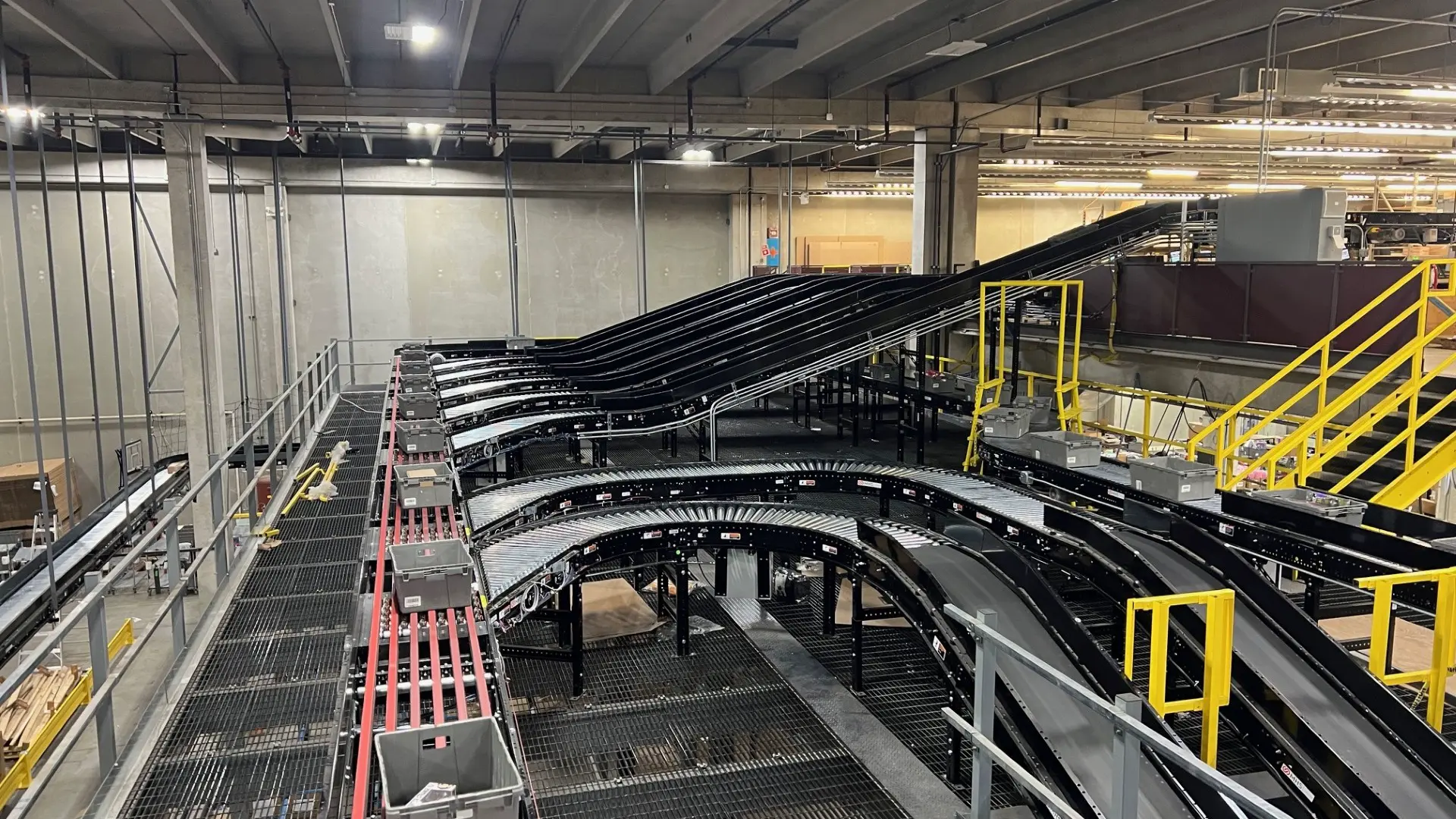
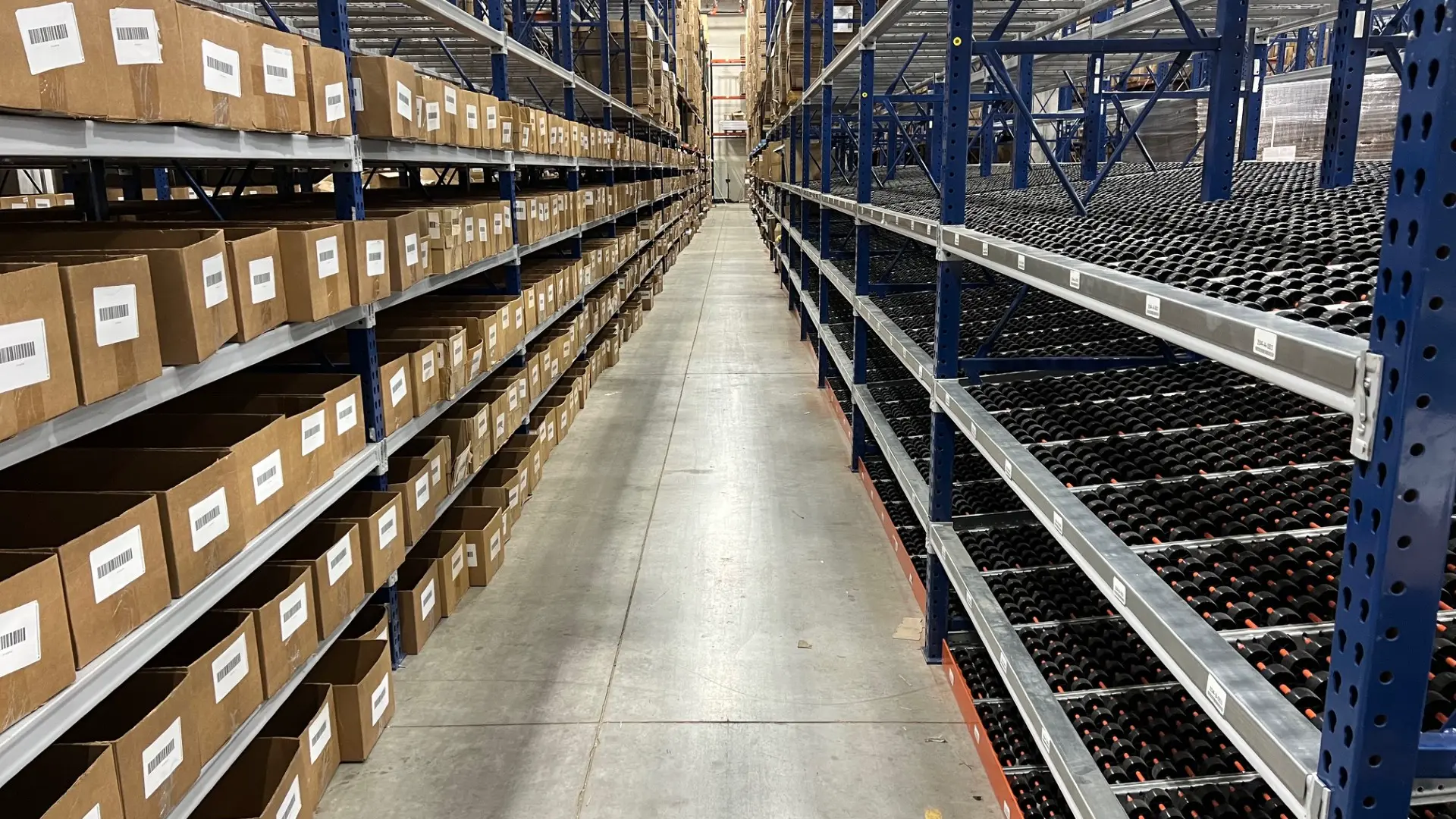
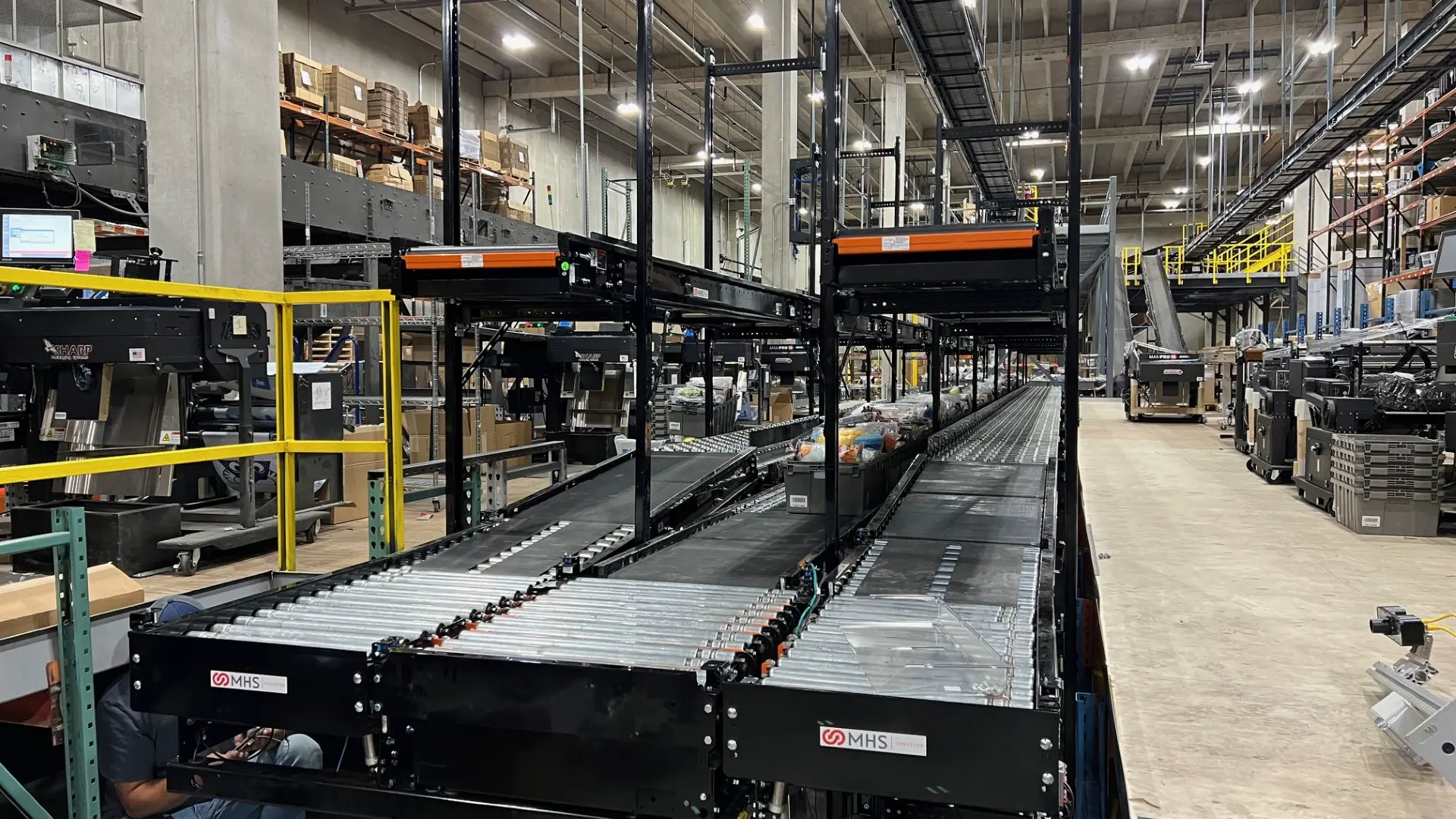
Rather than adding space, the facility was redesigned to get more out of the space it had. The picking conveyor was consolidated to reclaim floor space for additional storage. High-velocity SKUs were moved into carton flow to keep the pick face stocked and reduce replenishment trips. Picking and replenishment were separated so order pickers and forklifts were no longer working in each other's way. On the outbound side, a new routing strategy sent each order to carton-packing or automated-bagging lines based on how it needed to be packed, shifting about 65% of volume off the original sorter. The changes were phased in over about three months while the warehouse stayed fully operational.
Results
- Outbound throughput +25%. Order processing improved by roughly a quarter, heading into peak season.
- Sorter bottleneck 65% of volume rerouted. Orders were routed by packing method across carton-packing and automated-bagging lines, so most volume no longer depended on a single sorter that had reached capacity.
- Building expansion zero sq. ft. added. The extra storage and processing capacity came entirely from inside the existing 189,000-sq.-ft. facility.
- Labor reduced. The operation ships more orders with fewer labor hours required.
- Downtime none. The work was phased over about three months while fulfillment kept running.
Conclusion
Technologies Used
- Test
- Another Test